How to Install a French Drain: A Comprehensive Guide
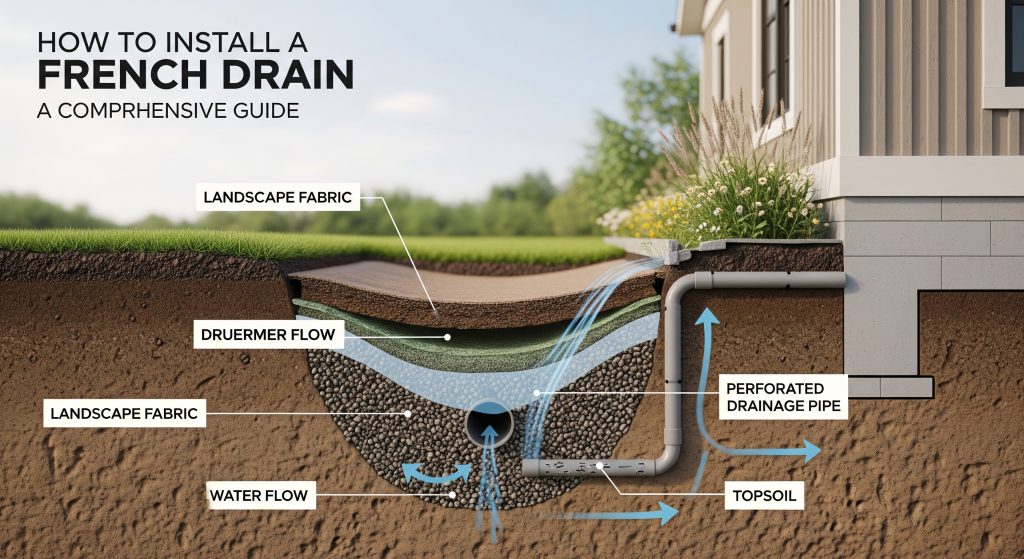
A French drain is an efficient system that directs excess water away from specific areas of your property. It comprises several components:
Definition and Components
- Perforated Pipe: This allows water to enter effectively, redirecting it away from your home’s foundation.
- Gravel: The fill material assists in drainage, helping water flow towards the pipe gently.
- Geotextile Fabric: This fabric is typically lined around the gravel to prevent soil from clogging the drain.
Common Uses and Benefits
- Redirection: They redirect water away from foundations, ensuring that the structure remains dry and secure.
- Pool Elimination: They eliminate pooling water in yards, enhancing the usability of your outdoor space.
- Moisture Control: They help manage moisture in crawl spaces, preventing mold and structural issues.
Comparisons to Other Drainage Solutions
French drains are particularly effective compared to surface drains or dry wells. While surface drains collect water on the surface, French drains intercept and redirect groundwater below the surface. This capability makes them ideal for chronic wet spots, providing better long-term solutions for homeowners.
Planning Your French Drain Installation
Before diving into installation, proper planning is essential. Here’s how to assess your yard and select the best location.
Assess Drainage Needs
- Identify problem areas where water accumulates, especially after heavy rains.
- Focus on regions where runoff threatens your foundation.
Selecting the Ideal Location
- Map a Route: Plan a drainage route from the problem area to a discharge point located safely away from your home and obstacles like septic tanks and utility lines.
- This careful planning ensures a more effective drainage solution.
Calculate Required Tools and Materials
Tools Needed:
- Shovels
- Trenchers
- Levels
Materials Needed:
- Perforated pipe
- Gravel
- Geotextile fabric
- Measure the trench length to determine the quantities of pipe and gravel needed.
Step-by-Step Guide to Installing a French Drain
1. Marking the Drain Path
- Use spray paint or stakes to outline the trench route.
- Ensure a continuous downhill slope—aim for approximately 1 inch of slope per 8 to 10 feet to allow efficient water flow.
Note: For accurate measurements, refer to our How to Calculate Board Feet: A Complete Guide to Lumber Measurement.
2. Excavating the Trench
- Recommended trench dimensions:
- For yard drains: 9–12 inches wide and 18–24 inches deep.
- For crawl spaces: 6–12 inches wide and deep.
- Maintain the 1-inch slope per 8–10 feet throughout the trench length.
- Safety Note: Always check for underground utilities before digging to prevent any accidents.
3. Laying the Geotextile Fabric
- Lay the geotextile fabric in the trench to prevent soil from mixing with the gravel and pipe. This measure extends the lifespan of your French drain significantly.
- Allow some excess fabric to fold over the top of the gravel after filling.
4. Installing the Perforated Pipe
- Opt for 4-inch diameter perforated pipes. Consider using either corrugated pipes for flexibility or rigid PVC for durability.
- Place the pipe with holes facing downward to facilitate water entry.
- Ensure the pipe maintains a consistent slope for optimum flow throughout its length.
5. Adding Gravel and Backfilling
- Use clean, angular gravel for superior drainage performance.
- Fill the trench around and above the pipe with gravel, leaving at least 2 inches of gravel cover above the pipe.
- Ensure gravel enhances water flow and protects the pipe.
6. Covering with Geotextile Fabric and Soil
- Fold the excess geotextile fabric over the gravel, covering it like a burrito. This measure prevents soil intrusion into the drainage system.
- Backfill the trench with the remaining soil, restoring the landscaping with sod or ground cover.
Tips for Successful French Drain Installation
- Maintain Consistent Slope: Double-check the slope with a level or measuring tape.
- Use Filter Fabric: Always use geotextile fabric to prevent clogging from dirt and roots.
- Test After Installation: Run water through the system post-installation to ensure proper flow.
- Avoid Common Mistakes: Be cautious of insufficient slope, improper pipe placement, and lack of adequate gravel.
Note: Learn from our How to Install Artificial Grass: A Comprehensive Guide to avoid similar installation pitfalls.
Tools and Materials Needed
Essential Tools
- Shovels: For excavation and backfilling.
- Trenchers: Makes digging easier, especially for longer drains.
- Measuring Tape & Level: To maintain proper trench depth and slope.
- Utility Knife/Scissors: To cut fabric as needed.
Materials List
- 4-inch Diameter Perforated Pipe: Choose high-quality materials for longevity.
- Geotextile Fabric: Protects from soil intrusion.
- Clean Angular Gravel: Ensures proper drainage.
- Topsoil: Necessary for backfilling after installation.
Make sure all tools and materials are of high quality to improve the effectiveness and durability of your French drain.
Cost Considerations
When considering the financial aspect:
- DIY Costs: Mainly for materials and tool rentals. Installing a French drain can yield substantial savings by eliminating labor costs.
- Professional Installation: In some complex situations (like interior drain systems), hiring a professional may be necessary due to labor and intricacies involved.
Before beginning your project, a ballpark cost estimate may help:
- Average materials might cost around $10 to $20 per foot for a French drain based on your local market.
- Tool rental fees might range from $30 to $100, depending on the tool and rental duration.
Troubleshooting Common Issues
Be prepared to address a few common problems that may arise once your French drain is installed:
- Blockages: If blockages occur, try flushing the drain with water or manually removing debris.
- Difficult Soil or Uneven Terrain: If you encounter hard or rocky soil, consider adjusting the trench depth or rerouting it. Specialized equipment can assist with harder soil.
- Persistent Drainage Problems: If issues persist, re-check the slope accuracy and discharge location. Consulting a professional may be advisable if problems do not resolve.
Conclusion
Installing a French drain helps protect your home from water damage, ensuring a long-lasting solution to drainage issues. By following this comprehensive drainage system guide, homeowners can confidently install French drains and manage water challenges effectively.
Explore related articles and resources about drainage solutions and home maintenance to expand your knowledge.
Additional Resources
For those looking to learn more about French drains or improving drainage systems:
Links to other related blog posts, videos, or tutorials can deepen your understanding.
Recommendations for specific products, such as pre-perforated drain pipes, high-quality geotextile fabrics, specialized tools, and reliable gravel suppliers, can be beneficial.
Key Takeaways
- Installing a French drain can prevent water-related issues around your home.
- Proper planning and measuring are essential for effective drainage solutions.
- Using quality materials and tools ensures the longevity of the drainage system.