How to Get Rid of Scratches on Car: DIY Fixes, Repair Methods, and Prevention Tips
Understanding Car Scratches
To effectively learn how to get rid of scratches on car surfaces, you must first understand the types of scratches. There are generally two categories:
- Surface Scratches: These scratches only penetrate the clear coat and usually appear as white or light marks. They are the easiest to fix and can often be remedied with simple DIY methods.
- Deep Scratches: These scratches reach beyond the clear coat and into the base coat, or even the metal itself. They expose the underlying layers and require more extensive repair techniques.
Common Causes of Car Scratches
Understanding the causes of scratches can help you prevent them in the future. Here are some common culprits:
- Environmental Factors: Debris from the road, tree branches, and even insects can cause scratches.
- Minor Accidents: Collisions in parking lots or unfortunate encounters with other vehicles can lead to scratches.
- Improper Washing Techniques: Using abrasive materials or dirty rags while cleaning your vehicle can introduce scratches, causing further damage.
Assessing the Severity of Scratches
How to Evaluate Scratch Depth
Once you identify a scratch, it’s essential to evaluate its severity. Here’s how to do it:
- Fingernail Test: Run your fingernail over the scratch. If it catches, it’s likely a deep scratch requiring professional help.
Visual Cues to Look For
- Shallow Scratches: These tend to look white and remain on the surface of the clear coat.
- Deep Scratches: These will display different paint layers or may even expose metal.
When to Go DIY vs. Professional Help
- DIY: If the scratch is surface-level, you can handle it with simple methods.
- Professional: For deeper scratches or those that expose metal, it’s best to seek professional repair services to avoid further damage.
DIY Scratch Removal Methods
Buff Out Car Scratches
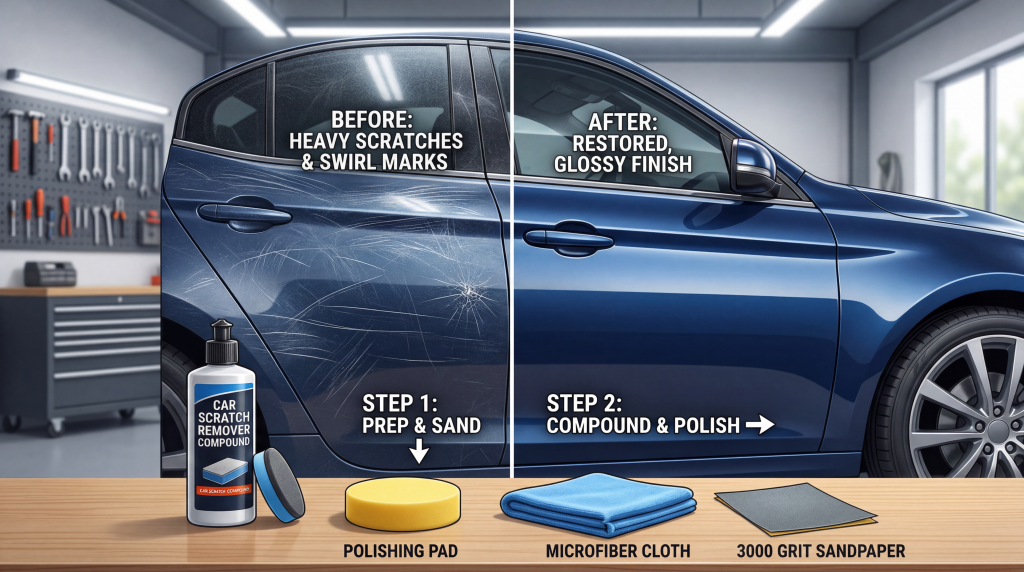
Required Tools: To buff out car scratches effectively, gather these tools:
- Polishing compound
- Microfiber cloth
- Masking tape
- 3000 and 5000 grit sandpaper
Step-by-Step Instructions
- Wash and Dry the Area: Make sure the scratched area is clean.
- Mask Surrounding Paint: Use masking tape to protect the surrounding paint from accidental damage.
- Wet Sand: Start by wet sanding the scratch with 3000 grit sandpaper, followed by 5000 grit. Use straight strokes rather than circular ones for the best results.
- Apply Polishing Compound: In a circular motion, apply the polishing compound with a microfiber cloth to buff out the scratch.
- Inspect the Area: Wipe away any residue and check the results.
Important Tips
- Avoid Excessive Pressure: Too much force can burn through the clear coat or paint.
- Check for Sharp Edges: After sanding, ensure there are no sharp edges that could lead to further damage.
Scratch Remover DIY Solutions
Common DIY Scratch Removers
Some effective DIY solutions for surface scratches include:
- Toothpaste
- Baking soda paste
- Commercial scratch removal products
Instructions for Application
- Gentle Application: Apply your chosen scratch remover with a soft cloth, making small circular motions.
- Rinse: After application, rinse the area and repeat if necessary.
Advantages and Limitations
- Advantages: DIY scratch removers are affordable, easily accessible, and simple to apply.
- Limitations: They are generally effective only on very minor scratches, and improper use might damage the paint.
You can find video guidance here: YouTube and YouTube.
Comprehensive Car Scratch Repair
Car Scratch Repair Techniques
For scratches that are deeper than surface level but not severe, you can combine buffing with touch-up paint followed by a clear coat application for added protection. For severe scratches, consider sanding down the entire affected area, repainting with matching spray paint here, and applying a clear coat as a final layer. The purpose of the clear coat is to seal and protect the new paint, blending it nicely with the surrounding area.
Tools and Materials for Advanced Repairs
When attempting more advanced repairs, you will need the following tools:
- Various grits of sandpaper (2000-5000)
- Spray paint that matches your vehicle color
- Clear coat spray
- Masking tape
- Cleaning and degreasing supplies
Preventing Future Scratches
To keep your vehicle looking its best and minimize the chances of future scratches, consider the following tips:
- Parking Strategies: Avoid tight spaces and locations prone to debris or close contact with other vehicles.
- Use Car Covers: Protect your car from environmental damage such as tree sap, branches, or dirt by using a cover.
- Gentle Washing Techniques: When washing your car, use soft microfiber towels and pH-neutral soaps to avoid causing scratches.
- Regular Waxing: Waxing your vehicle regularly creates a protective layer that minimizes the visibility of scratches.
When to Seek Professional Help
Clear Indicators for Professional Repair
There are clear indicators when you should consider professional help for your car scratches:
- The scratch exposes bare metal.
- It is very deep.
- It covers a large area.
Benefits of Professional Repair
Choosing professional repair offers several advantages:
- Expertise: Professionals have the skills to assess and repair damages accurately.
- Specialized Tools: They will use specialized tools and materials designed for optimal results.
- Color Matching: Professionals have access to precise color matching, ensuring a seamless repair.
- Warranty: Many auto body shops offer warranties on their work, providing peace of mind.
How to Select a Reputable Auto Body Shop
When searching for a reputable auto body shop, consider these steps:
- Check Online Reviews: Look up reviews and feedback on platforms like Google and Yelp.
- Certifications: Verify if the shop has industry certifications and qualifications.
- Before-and-After Photos: Request to see previous work to assess their capabilities.
- Inquire About Warranties: Always ask about the warranty policy on repairs before proceeding.
Conclusion
In summary, knowing how to get rid of scratches on a car can save you money and keep your vehicle looking new. We shared several effective DIY methods that include buffing out car scratches, utilizing scratch remover DIY solutions, and applying touch-up paint for deeper scratches. Always assess the severity of a scratch before choosing a repair method, as this will help ensure the best results. Finally, regular maintenance—such as proper parking, gentle washing techniques, and routine waxing—can help you keep your car scratch-free for years to come.
Key Takeaways
- Understanding the types of scratches is crucial for proper repair.
- DIY methods can effectively address minor scratches.
- Regular maintenance can prevent future scratches and save costs.
Additional Resources
For more information on car scratch repair, check out these additional resources:
- YouTube tutorials covering buffing and comprehensive scratch repair are available here: YouTube Video 1 and YouTube Video 2.
- You can also look for frequently asked questions about scratch removal effectiveness, risks, and product recommendations to help you make informed choices.
With the knowledge from this guide, you are equipped to tackle scratches on your car and maintain its appearance for years to come!