How to Decrystallize Honey: Simple Steps to Restore Smoothness
Honey is a beloved natural sweetener that many people enjoy for its taste and health benefits. However, at some point, you may have encountered crystallized honey—an occurrence that can be disheartening. Fortunately, learning how to decrystallize honey is straightforward and can restore your honey’s smooth, liquid state without compromising its quality. In this post, we’ll discuss why honey crystallizes, the benefits of decrystallizing it, and several effective methods you can use to fix hardened honey.
Understanding Honey Crystallization
Crystallization is a natural phenomenon that occurs in honey due to its high sugar content, specifically glucose. When glucose separates from the water in honey, it forms crystals, causing the honey to become grainy or opaque. Importantly, this crystallization does not indicate spoilage; instead, it reflects honey’s natural properties.
Factors Influencing Crystallization
- Temperature: Honey tends to crystallize more quickly at temperatures below 57°F (14°C). Storing it in a cooler environment can hasten this process.
- Honey Type: Raw, unfiltered honey (which contains more pollen and particulates) crystallizes faster than highly processed honey.
- Storage Conditions: Fluctuating or cooler temperatures can increase the risk of crystallization.
At a chemical level, crystallization occurs due to glucose saturation and the formation of nucleation points where crystals can develop. This is a perfectly safe, natural process that many honey enthusiasts may encounter.
Why Decrystallize Honey?
Learning how to decrystallize honey offers several benefits, making it easier to use in your daily life:
- Easier Pouring and Mixing: Liquefied honey is much simpler to pour over dishes, mix into recipes, or use as a sweetener in drinks.
- Preservation of Nutrition: Properly decrystallizing honey helps to maintain its valuable nutrients and flavors. If honey is overheated, it can lose essential enzymes and health benefits.
- Versatile Use: For various culinary purposes, including baking and cooking, liquefied honey is preferred, ensuring you maximize its usability.
By understanding the reasons to decrystallize honey, you can enjoy its delightful flavor and health properties without any hassle.
Note: Also read our guide on How to Clean Gold Jewelry for safe and effective cleaning tips.
Methods to Decrystallize Honey
Let’s explore practical methods to decrystallize honey effectively and safely.
Warm Water Bath (Recommended Method)
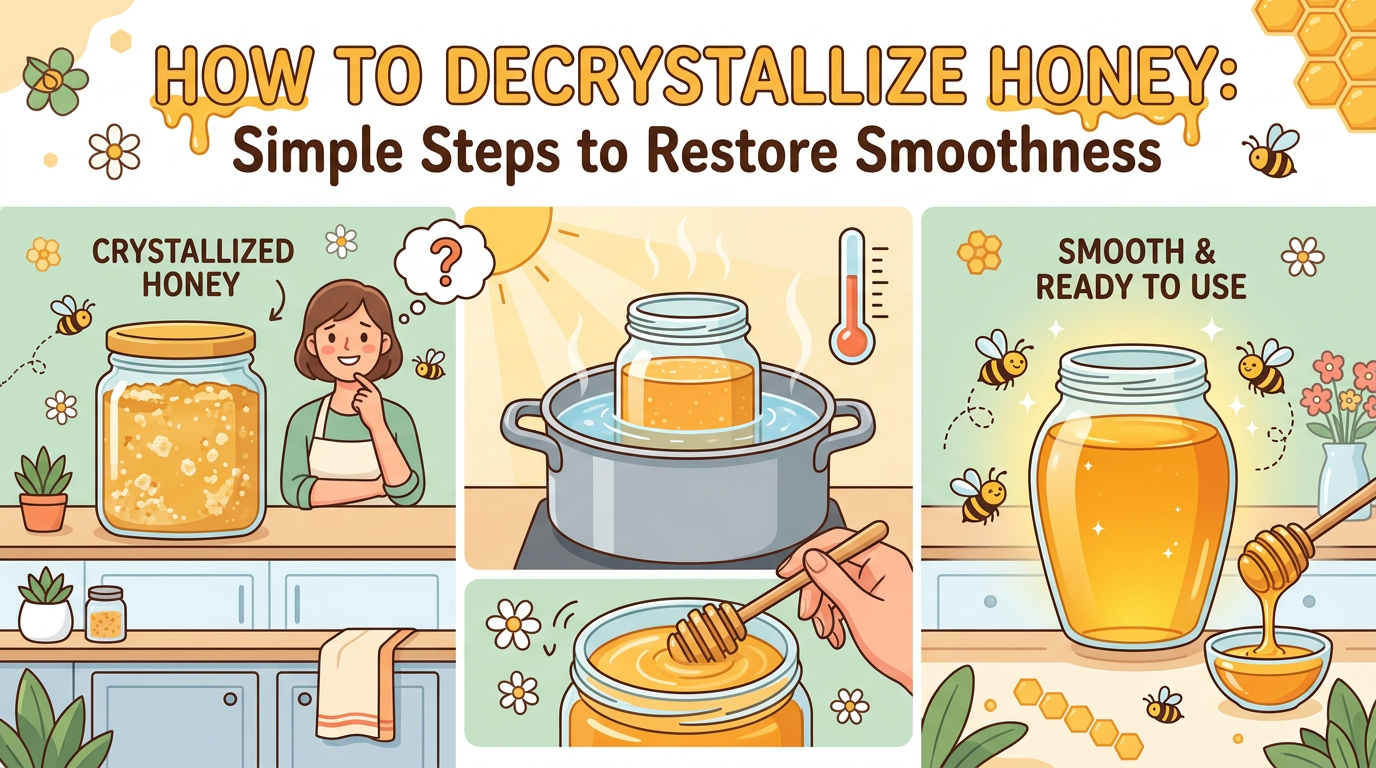
Using a warm water bath is one of the safest and most effective methods to restore crystallized honey. Follow these steps:
- Use a Sealed Glass Jar: If your honey is in a plastic jar, transfer it to a glass jar. Glass is more heat-resistant.
- Prepare the Water Bath: Fill a bowl or pot with warm water, maintaining a temperature between 95–110°F (35–43°C).
- Place the Jar in Water: Set the jar upright in the warm water, ensuring that the water level does not reach above the lid. This prevents contamination.
- Heat the Honey: Let the honey sit in the water for 15–60 minutes. Stir occasionally with a clean utensil to help speed up the liquefaction.
- Monitor the Temperature: Avoid using water hotter than 110°F to maintain enzyme integrity—boiling water can damage honey’s quality.
By employing this method, you can effectively fix hardened honey while keeping its natural benefits intact.
Honey Microwave Tips
While not the most recommended method, you can also use a microwave to decrystallize honey if done cautiously:
- Choose a Suitable Container: Always microwave honey in a glass container, as plastic can release harmful substances when heated.
- Use Low Power: Heat honey on a medium or low setting in short intervals of 15–20 seconds.
- Stir Frequently: Between each heating interval, stir the honey to ensure even heating and to help dissolve the crystals.
- Be Cautious: Avoid overheating, as this can burn the honey, destroying its beneficial enzymes and distinct flavor.
Although microwaving is faster, it carries risks compared to the water bath method.
Reheat Honey on the Stove
Another effective method to reheat honey involves using the stovetop:
- Prepare a Double Boiler: Place the sealed jar of honey inside a small container and fill a saucepan with warm water.
- Set Heat Control: Use a low to medium-low setting, closely monitoring the temperature to keep it below 110°F.
- Stir to Distribute Heat: Occasionally stir the honey to help distribute the heat evenly and promote liquefaction.
- Compare Method Efficacy: This method offers better heat control than microwaving but requires more attention.
Using the stove can be a practical alternative that balances efficiency and caution.
Alternative: Warm Area Method
For those preferring a gentler approach, consider the warm area method:
- Choose a Warm Spot: Place the honey jar in a warm area, like near a radiator or a sunny window, ensuring it is sealed.
- Let it Sit: Allow the jar to stay in the warmth for 1–2 days, stirring every so often to encourage even melting.
Although this method is slow, it effectively preserves the natural qualities of honey.
You may also find this helpful: How to Get Gum Out of Hair — an easy step-by-step removal guide.
Fixing Hardened Honey
If you find yourself with very crystallized or hardened honey, here are some helpful steps to restore it:
- Repeat the Warm Water Bath: If honey has solidified significantly, gently go back to the warm water bath method for a safe fix.
- Stir to Combine: If you notice partial liquefaction, stir the honey thoroughly before reheating again if necessary.
- Limit Microwave Use: Avoid repeated microwaving as this can degrade the quality of the honey each time.
- Exercise Care with Water: Be cautious of water entering the jar, as this could lead to fermentation.
Preventing Future Crystallization
Taking preventive measures can help reduce the chances of honey crystallizing again:
- Store Honey Properly: Keep honey at room temperature, ideally between 64–75°F (18–24°C), to slow down crystallization.
- Seal Tight: Ensure that honey jars are tightly sealed to avoid exposure to air and humidity.
- Avoid Refrigeration: Storing honey in the fridge accelerates crystallization, so keep it in a dark, dry place instead.
- Use Honey More Frequently: If using raw or minimally filtered honey, consider speeding up your usage as these types tend to crystallize quicker.
Frequently Asked Questions (FAQs)
Q: Is crystallized honey bad?
Absolutely not! Crystallized honey is still safe to consume and is often preferred by some for its texture.
Q: Can all types of honey be decrystallized?
Yes, all types of honey can be decrystallized. However, raw honey tends to crystallize more quickly than heavily processed honey.
Q: Can microwaving honey ruin it?
Microwaving honey is possible, but it’s crucial to do it correctly to prevent overheating and degrading its quality.
Conclusion
In summary, knowing how to decrystallize honey can enhance your kitchen experience, allowing you to enjoy this sweet treat in its liquid form once again. By utilizing gentle heating methods like the warm water bath, you can maintain honey’s nutritional properties and wonderful taste. Whether you opt for the microwave or stove as alternatives, just remember to use caution to avoid overheating. Crystallization is completely natural and reversible—embrace it as part of the joy of having honey in your pantry!
Key Takeaways
- Crystallization is natural: It does not indicate spoilage.
- Several methods exist: Each with varying efficacy and safety.
- Prevention is key: Proper storage can reduce crystallization.